
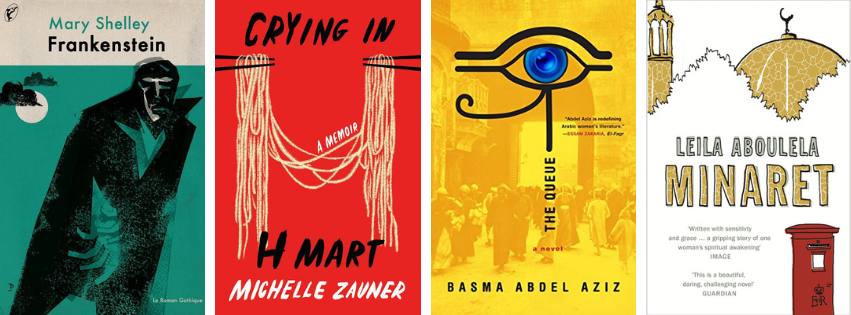
On some years, International Women’s Day asks us to look outward; at progress, at power, at the language of visibility. Ramadan asks something quieter. It asks us to look inward. This year, as the two meet, celebration feels less like a slogan and more like a practice. Instead of another must-read list, we imagine a small home library built with intention, meant to travel from mother to daughter, older sister to younger, friend to friend. These are books offered as Eidi – gifts that hold more than a story. They hold questions about responsibility and faith, about hunger and memory, about the systems we inherit and the ones we challenge.
The Foundation
Frankenstein by Mary Shelly
Mary Shelley’s Frankenstein, written when she was just 18, is not only a cornerstone of literature but also the first novel widely recognised as science fiction. Shelley’s vision of a tale of creation, ambition, and human responsibility, was groundbreaking, imagining scientific possibilities and moral questions that continue to resonate today. As the story of Victor Frankenstein and his creature has been adapted countless times, including Guillermo del Toro’s recent cinematic take, it’s more important than ever to return to Shelley’s original text. Her prose is both intimate and daring, exploring themes of gender, power, and the consequences of playing God with nuance and foresight. Frankenstein is a book that sparks conversation across generations, offering a shared space to reflect on ambition, ethics, and the human condition. It transcends the gothic aesthetics, standing as a masterwork that has shaped literature and continues to inspire imagination, curiosity, and debate.
The Sanctuary
Minaret by Leila Aboulela
Minaret follows Najwa, a young Sudanese woman who leaves her privileged life behind to start anew in London. Leila Aboulela writes with calm precision, showing the quiet power of faith, reflection, and the small moments that shape a life. The novel is a meditation on belonging, identity, and spiritual renewal, making it a perfect companion for quiet hours of contemplation, especially during Ramadan. Aboulela’s prose is gentle yet profound, inviting readers into a world where faith and daily life intertwine seamlessly. This is a book to savour slowly, reflecting on the choices we make and the values we carry. A gift to pass from mother to daughter, Minaret is a reminder that spirituality can be a private sanctuary, and that the most transformative journeys often begin within ourselves.
The Feast
Crying in H Mart by Michele Zauner
Michele Zauner’s Crying in H Mart is a love letter to food, family, and memory. Through her experiences growing up Korean-American, Zauner explores the deep connections between culture and identity. Each dish, recipe, and supermarket visit carries stories of loss, joy, and belonging. The memoir is deeply personal, yet universal in its honesty and tenderness. Zauner writes with clarity and warmth, making her grief and nostalgia tangible without ever feeling heavy. It is a book that reminds us how meals can serve as touchstones for memory and emotion, and how the act of cooking and sharing food becomes a quiet form of storytelling. For a home library, this memoir is an essential gift – one that blends sensory richness with emotional depth, offering readers both comfort and reflection in equal measure.
The Future
The Queue by Basma Abdel Aziz
Basma Abdel Aziz’s The Queue is a piercing exploration of life under bureaucracy, oppression, and control. Set in a dystopian society, the novel follows citizens navigating endless waits, forms, and permissions, capturing both the absurdity and the terror of authoritarian systems. Abdel Aziz writes with clarity and tension, combining sharp political observation with empathy for her characters. The story is gripping, yet it also offers space for reflection, asking readers to consider the value of resistance, dignity, and personal agency. For a contemporary Eid gift, this novel signals the promise of new perspectives and voices emerging from the Global South. The Queue belongs on the shelf of any home library that values courage, imagination, and stories that spark conversation. It is a reminder that literature is not only about escape – it is also about seeing the world differently.