
Students take on the responsibility of cleaning lakes with 55 Kodomtola’s green initiative.
Soft morning light cascades over the lakeside, illuminating the subtle gleam of the water, the refuse scattered across the ground, and a small gaggle of students from Sir John Wilson School peering up at a brick wall. The wall itself is decidedly unremarkable – worn, scratched, and faded. The students are dressed in simple, identical clothing, brushes dangling from some of their hands. Quiet chatter fills the air as the teenagers pass around a picture on a phone. Then they roll up their sleeves and begin to draw.
55 Kodomtola is a volunteer-led initiative based in the Gulshan and Banani areas. Its aim is simple, but ambitious: to beautify the lakesides of Dhaka city.
When walking down the winding path that lines the water’s edge, you may see a man diligently clearing away scraps of litter from the ground. You may see figures covered in vibrant streaks of paint, or small groups gathered around half-constructed benches, or clusters of people kneeling to plant saplings by the lake. With almost forty five kilometers of lakeside under work, and multiple collaborations with organisations such as ActionAid Bangladesh and Unicef, the initiative grows larger every day.
However, it did not start with tubs of paint or the warm backdrop of a dozen overlapping voices. It started with a single man and a single road, as newly relocated photographer Mahmud Rahman began cleaning the area around his home.
“My husband is one of those people who reaches out and engages people,” shares his wife, Orla Murphy, during a Dhaka Flow Fest panel. She had been the first to join his efforts and had seen him regularly strike up conversations with those passing by. As friends and neighbours began pitching in to help, what had begun as a personal mission grew into a community endeavour that was open to anyone willing to lend a hand.
Sir John Wilson School was willing.
“I just thought there was so much good in it,” expressed Sabrina Shaheed, Principal of Sir John Wilson School. Over the course of several months, the school sent three groups of students to the site. “If we all work on our own surroundings – where we live – and take initiative, I think the whole city will get better.”
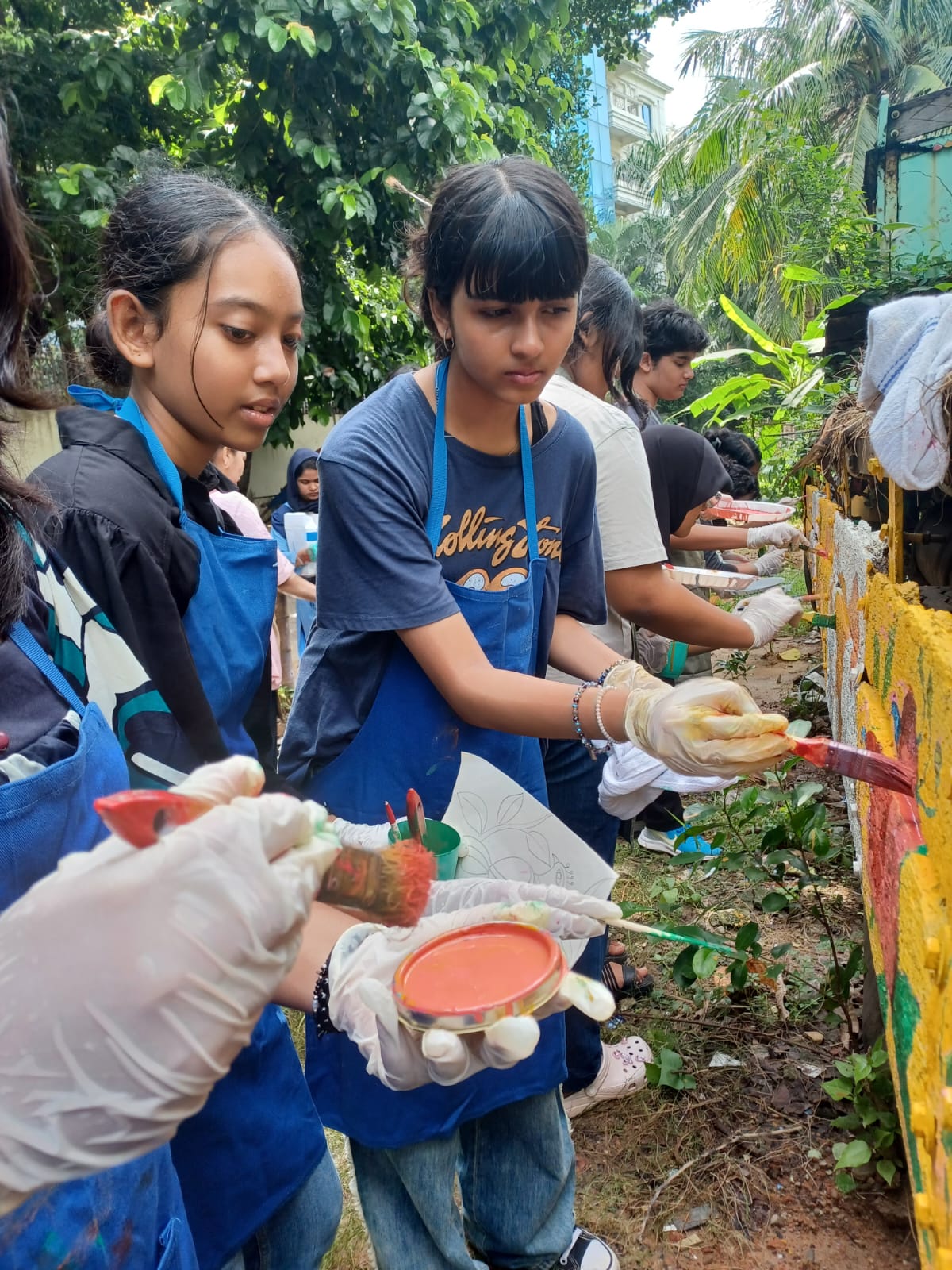
The collaboration took place in three phases.
The first batch of students took on mixed tasks. Some planted, fingers digging into rich, dark soil to place saplings into fresh cradles of earth. Others cleaned, carefully clearing plastic bags and refuse, washing away traces of a city too impatient to wait for a bin. A few constructed simple but sturdy bamboo benches for pedestrians to rest their feet. All worked side by side, guided less by instruction than by shared purpose.
The second wave of students had a more unified objective. Handpicked for their artistic skill, their task was to cover the drab lakeside walls with murals and images. Vibrant wings and curling leaves came to life under their hands as years of accumulated dirt and dust were replaced with vivid swathes of paint.
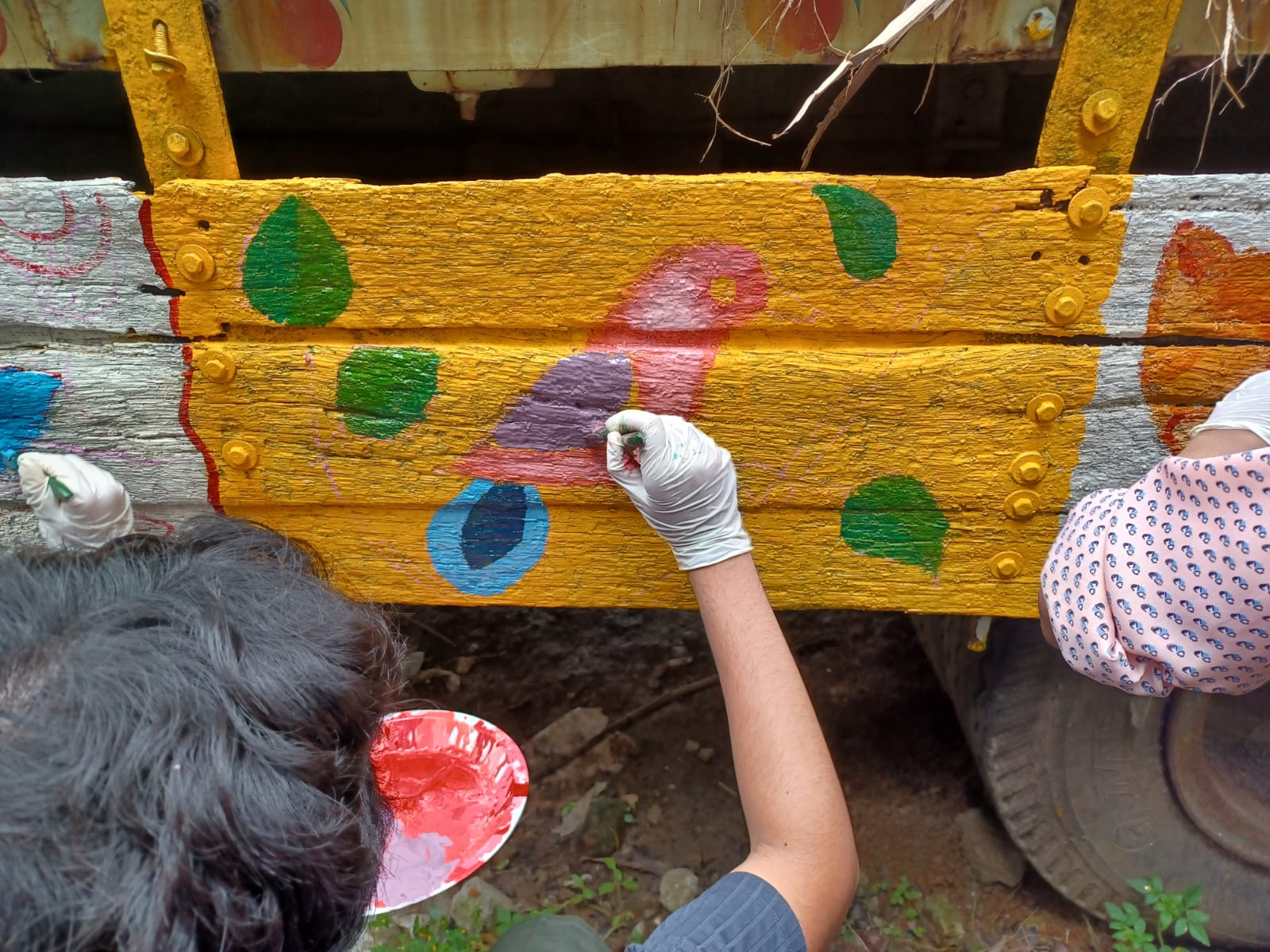
The third group carried out a similar task, albeit with a different twist. Instead of murals, they painted the distinctive motifs of rickshaw art, decorating an abandoned truck found near the Kodomtola site.
When asked if the students had enjoyed their excursions, the principal’s answer was affirmative. “I know of at least one boy,” she said, “who is a permanent member now. I was just passing through that road when I saw him. I stopped the car and asked, ‘What are you doing here?’ And he said, ‘Well, I work here every weekend now. I enjoy it.’”
The sentiment appears to be a common one.
“It was very fun,” said another volunteer. “We just did whatever we could. One of us sketched, then we outlined it and painted over it.” A smile overtakes her face. “Then we climbed up a ladder, and one of us fell off – and paint dripped all over us. Overall, it was very fun.” Though the trips were over a year ago, her recollection remains vivid.
The murals are gone now – their vibrant colours faded by wind and rain. The initiative has reached out once more, asking for volunteers. They will likely see responses.
The old paint may have washed away, but the memories have stuck.