
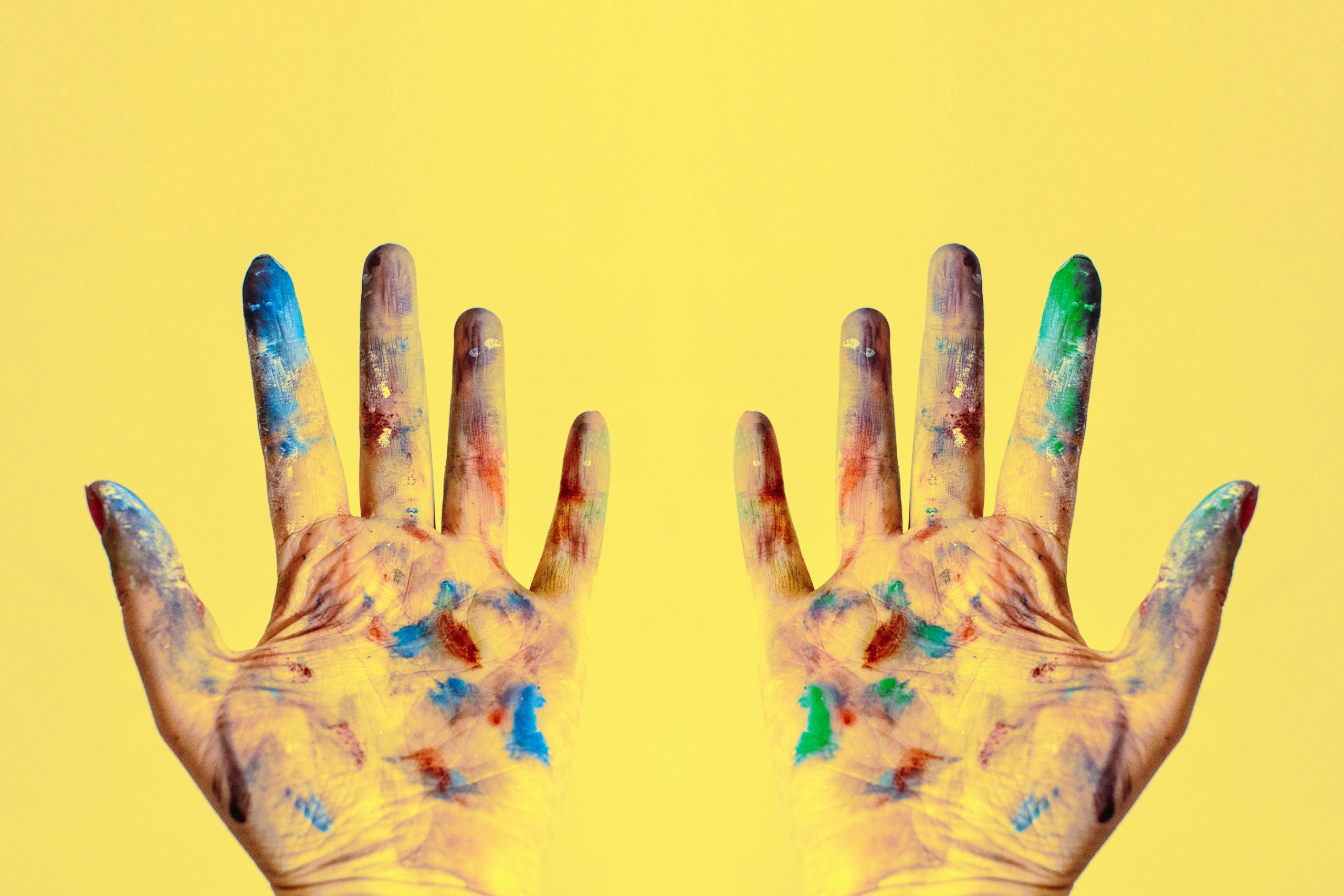
From confidence to empathy, creativity builds skills no worksheet ever will.
Creative arts education is undervalued by modern academia, which prioritises test scores and a packed curriculum with core subjects. They are often treated as an afterthought that is wonderful but expendable. But scientific research consistently shows us that creative arts education strengthens children’s emotional resilience, cognitive development, cultural awareness, and overall well-being. I have seen this across continents and generations, and now in the lives of my daughters, who are a unique mix of cultures.
With Bangladeshi and Brazilian parents, ancestral roots in Italy and the Amazon rainforest, and an upbringing in diverse, liberal-minded California, my two daughters are growing up surrounded by differences but with the knowledge that strength is in diversity. One of the most powerful ways they have learned to understand, honour, and articulate that difference is through the arts. For many families like mine, the arts are not simply enrichment; they are a bridge to identity, belonging, and confidence.
Surrounding them with Bangla music even before they were born was one of my ways to introduce my roots to my children with the hope that they grow up to be well-rounded, culturally attuned individuals. I still remember the surprised look on my former colleagues’ faces when my then-three-year-old walked into my former professor’s office at IUB in Dhaka, pointed at an outline portrait of Rabindranath Tagore, and confidently announced his name. She then began listing the Tagore songs she loved to sing! She sat confidently beside the noted singer Nashid Kamal and sang “Chander Hashi Badh Bhengeche.” Through music, my daughters learned that heritage is not something abstract; it’s something to feel, to express, and to be proud of.
I come from a family that believed in the transformative power of creativity. My mother, a child specialist Clinical Psychologist at Dhaka University, always taught me that the arts are not mere pastimes. They are the tools children use to understand the world and themselves. She would often talk about how the art of storytelling and drawing was so important to extract information from individuals who needed help with their mental health. She herself played the sitar beautifully, recited poetry that could silence a room, and danced gracefully at a young age. I remember my maternal grandfather, a Quran e Hafiz, who recited Qur’anic verses so eloquently that they echoed through our home, teaching us that beauty and meaning often arrive together.
Music, dance, poetry, and performance were woven into my childhood as naturally as reading and math. So when I moved to Austria at a young age, after my father joined the UN, and suddenly faced a new language and a new world, the arts became my anchor. Music offered belonging when everything else felt unfamiliar. The Bangladeshi community’s appreciation for my singing and harmonium playing was a way to hold on to who I was. At my international school, a rich arts program introduced me to global musicians and sparked my love for impressionism and Monet. The arts helped me adapt and grow.
Years later, returning to Bangladesh as a high school teenager brought another wave of disruption — hormones, unfamiliar faces, and yet another school system. Drama class became my refuge, and writing poetry helped me release feelings I was harbouring inside. Again and again, the arts carried me through transitions I could not have navigated alone. Even now, living abroad once more, it is music that reconnects me to home, and to myself. When I perform on stage, I feel an immediate connection to my heritage, community and beyond. Amid every shift, one truth holds steady: engagement with the arts strengthens us in ways we often recognise only in hindsight.
So when my first daughter was born, I spoke, read, and sang to her in Bangla. My husband did the same in Portuguese. We avoided English and screens in her earliest years to give her the gift of deep immersion. By age two, she was reciting “Baburam Shapure” flawlessly and serenading her Brazilian relatives in Portuguese. But as she grew more reserved over the years, I encouraged her into music and theatre, both in and beyond school. The change was unmistakable: she auditioned for roles she once feared, made friends more easily, and discovered the confidence that only creative risk-taking can build. Today, as a teenager, the arts continue to shape her. Her teachers praise her emotional maturity; her friends seek her out for comfort. When a friend grieving her mother told me how deeply my daughter’s text moved her, I was reminded that empathy, expression, and connection are skills art cultivates, soft skills which will continue to help her in the long run. The changes do not happen overnight. But they surely happen with perseverance.
Our younger daughter, too, has found her voice in creativity. She writes poetry, experiments at the piano with Bangla, Portuguese, and Hindi songs, and approaches challenges with curiosity instead of fear. Teachers often comment on her problem-solving skills, sharp memory, and willingness to ask bold questions about everything from religion to astrophysics. During Ramadan, she proudly introduces Eid to her classmates through digital presentations and henna designs. At gatherings, she confidently jumps into Antakshari, often outpacing Bangladeshis who were born and raised in Bangladesh.
As school gave less attention to creative arts over the years, I became more intentional at home. Our afternoons were spent crafting, painting, building; simple projects that sparked joy and strengthened their problem-solving, fine-motor skills, and creativity. Their paternal grandmother, an award-winning Brazilian artist, opened their world to colour. Even though neither of them pursued painting deeply, the exploration gave them a visual language for ideas and emotions still too abstract for words.
This is what the creative arts do: they cultivate capacities that traditional academics – and many parents – often overlook. Through artistic exploration, children learn to think independently, imagine possibilities, embrace ambiguity, and find innovative solutions. They learn empathy, and confidence. They learn who they are. When I drive my teenager back from school, I love that her playlist includes Muza’s “Tumi Chara.” In fact, she introduces me to a lot of Bangla songs I haven’t heard before!
If we want our children to grow into resilient, thoughtful, culturally fluent adults in this increasingly complex and rapidly evolving world, we must make space, in our schools, our homes and communities, for music, dance, storytelling, painting, theater, and the rich cultural tapestries they hold.
The arts don’t just enrich childhood. They shape it. They guide it. And, very often, they save it.