
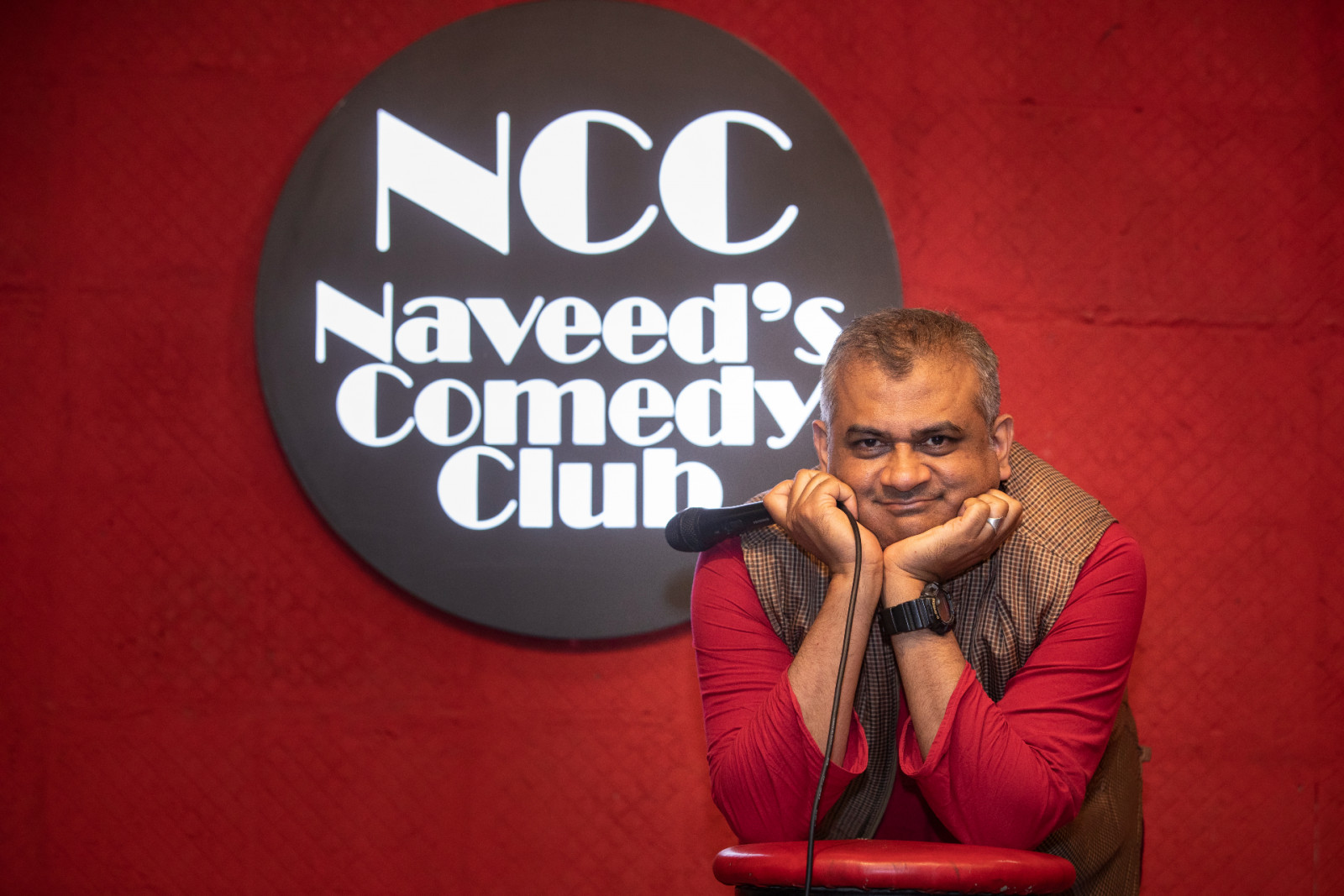
Naveed Mahbub on the game of Bangladeshi stand-up scene
Naveed Mahbub, the iconic success story of a career change from the corporate industry to a creative one, has made an unmatched name for himself in the Bangladeshi stand-up comedy scene. Riddled with ambition and self-assurance, his calendar remains mostly packed for gigs across the capital and even internationally. He’s been around long enough to not just play the game but master it.
Aside from compelling audiences to return for a lively and freeing time, Naveed Mahbub has, over the years, created a platform, Naveed’s Comedy Club (NCC), for others, breathing life into yet another form of entertainment in Dhaka. He opened up more about his side of the story over the phone while attending to his lineup of scheduled gigs abroad.
Naveed’s Comedy Club has been a huge part of the community for years. I imagine it’s about more than just a stage and a microphone. Beyond the laughs, what role do you think the club played in the social fabric of the neighbourhood?
The club is certainly much more than a place for entertainment; it goes beyond a comedian taking the stage with a microphone trying to make people laugh. Laughter has its own health benefits. Besides, life is stressful as it is, and the club is a place where people can come to decompress by not having to think much. There’s also a food court where they can easily hang out or even work after. Moreover, we deliberately maintain a family-friendly atmosphere by keeping the comedy G-rated more often than not, to encourage the presence of children. In other words, it is a community space that exists to provide people with healthy entertainment.
You’ve mentored so many and made people laugh. What was it about this community that allowed them to be so raw and authentic? What did you see in them that maybe they didn’t see in themselves?
I’m not sure if I’d claim to have mentored them because there’s not much to be trained. I’ve been clear about explaining the fundamental basics to them, and they are intelligent people, so they simply put those to use. What we have done through NCC is provide a platform and encouragement for them to use their skills. The only way to develop stand-up comedy skills is to persistently put oneself up on the stage. It’s not so much about us discovering what they have within; they knew what they are capable of, they simply mustered the courage to try. This takes a lot, including letting everyone know who they are by baring themselves and their tragedies. When they are up on stage speaking publicly — a fear that is considered to rival the fear of death itself—they do it for the added difficult task of making people laugh and that in itself is an accomplishment.
In a city where there are so many entertainment options, why do you think so many people chose to spend their time at your club?
I beg to differ. What other entertainment options do people in Dhaka really have? The only option aplenty is food. The city and our culture both are very food-centric, which is also a beauty of the city. There are theatres, but people tend to watch content through the various screens they own. Another entertainment option can be live music, but those take place sporadically. Having said that, it’s not as if a huge number of people are regularly attending comedy shows, but there have been times when a naysayer came in for a comedy show and became a convert. They admire it so much that they return with intention.
It’s clear you’re not just a club owner — you’re a cornerstone of this community. When you look back at everything you’ve created, what’s a moment that made you realise, ‘This is bigger than just comedy’?
My wife and I are the club owners, and I am also a comedian; these two are vastly separate roles. When I’m on stage, I become an artist just like any other comedian. If I were to look back and see how far we’ve come, then I’d say that it’s been a difficult yet phenomenal journey — financially and mentally speaking. We were once shut down and struggled to pay rent, resorting to pay from our own pockets. But we continued, and today we do feel like there has been a paradigm shift. This is especially true considering stand-up comedy is increasingly taking up space on mainstream media. Comedians are getting hired for TV, streaming platforms, corporate events and even educational institutes where previously the country mostly had music and recitations to offer. Witnessing ourselves in the mainstream makes us comedians feel a sense of triumph because stand-up comedy is now actively seen as one of the established art forms. In Bangladesh’s context, our comedy club has been instrumental in making that possible.
I understand it’s a big moment for the club, with the relocation. What can your regulars expect from the new space? What’s going to feel familiar, and what’s to be a new surprise for them?
We are looking for a place similar to what we had, where we can recreate the ecosystem we were fortunate enough to create. We had a cafe, and free WiFi with a sprawling food court at reasonable prices. We are doing our best with everything so that we can return sooner rather than later.