
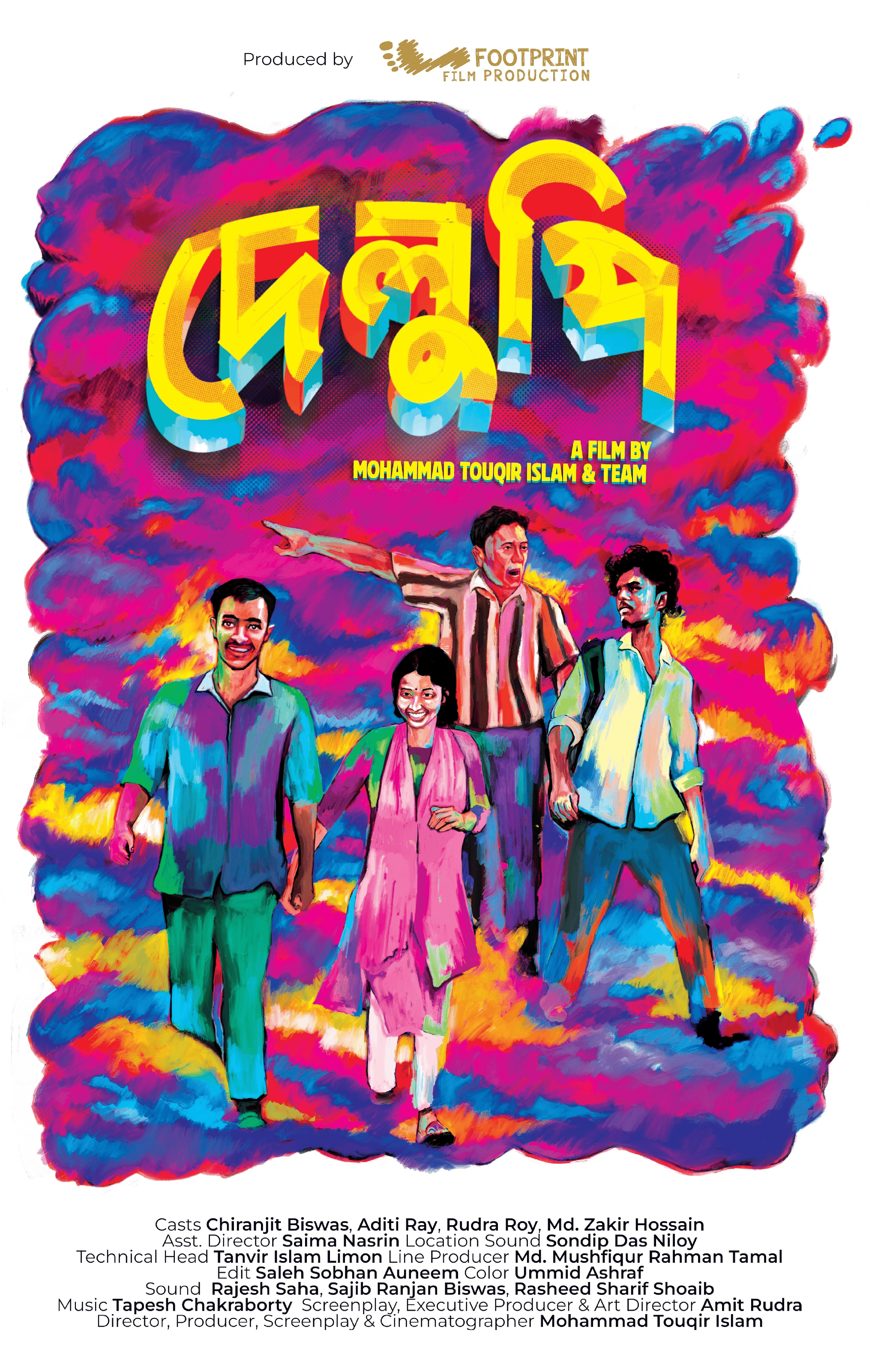
 A love story unfolds amid political upheaval and rising extremism, as Delupi captures the pulse of a changing nation through authentic voices and village life.
Delupi is definitely one of the best films to come out of Bangladesh’s film industry. This is not a film with any stars, and it is not your run-of-the-mill Bangladeshi film with a social message. That is because the message is hard to discern for anyone when it very vividly lays bare the politics in Bangladesh.
The film’s characters are in the same situation we have found ourselves in Bangladesh. The Prime Minister has escaped the country. A devastating flood has hit a village in the South of Bangladesh, in which the film is set. A political party that was dormant starts gaining clout. A former political leader starts acting as if he is already elected. The youth who revolted to bring down the previous regime are left with two options. To collude or to go on their own path. One activist among the youth also wants to be a leader. Amidst all of this, a very real love story unfolds and culminates in elopement.
You may think, so what? A film that uses the plot of Bangladesh in 2025 for its story, with a love story thrown in the mix. What is so special about that?
The beauty of the film is the performance of its cast, many of whom appeared on the silver screen for the first time in their lives. These are not trained actors. This film is set in a rural Bangladeshi village prone to floods. Therefore, the director intelligently made this story seem real by shooting the film in a village, with no expansive sets, and cast people who represent the same socio-economic background as their characters. There is no extensive makeup on the characters. There are no dialogues that sound forced from being uttered by actors through short-term dialect training. The language of the people in the film sounds real, as the cast are from South-Western Bangladesh, so the actors speak their mother tongue. The set designs are similarly authentic images of a village.
People who have lived in villages will appreciate this film, as they will feel that this is a story they have probably heard from their relatives being depicted on the screen. As for city-dwellers, it’s hard to say what they will think. This is not a film that steals scenes from famous films of Hollywood, Bollywood, or the Tamil film industry. This is just an anthology film of sorts, interwoven stories reflecting Bangladesh’s current scenario like a “black mirror.”
The real strength of the film is the juxtaposition of a set of Jatra actors trying to perform a production, and learning the lines, within the story of the film. Jatra, a form of entertainment for the people of our countryside, is slowly dying with the advent of television and the internet. Here in this film, it is dying due to the senseless actions of a few people with extreme beliefs. Such a clear reflection of how artistic freedom is being encroached upon every day by mobs. What a clear mirror to Bangladesh 2.0!