
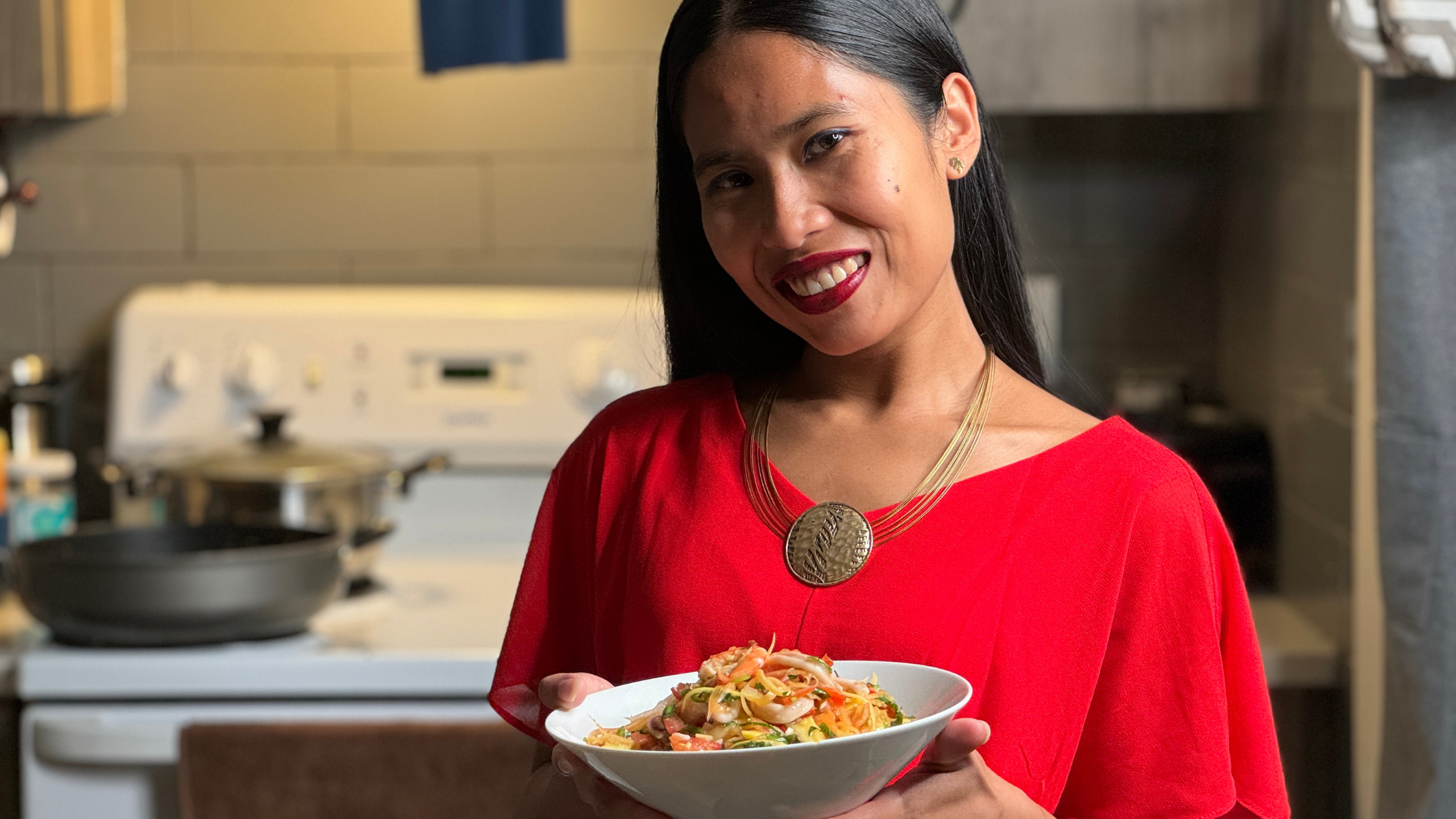
Table for Her by Adhara Mercy, an exclusive women’s only supper club reimagines what it means to gather around a table.
The last Thursday of April arrived humid and slow, the kind of Dhaka evening that makes people cancel plans at the last minute. But inside the Table for Her, the women kept arriving anyway – one by one, slipping into conversation almost immediately.
The supper club by Adhara Mercy, was intimate without trying too hard. There were eight guests in total, all working women, just the right combination of creatives and academics seated around a long table while Victoria Chakma, the photographer and videographer and Thangsri Sangma, our host of the night moved discreetly through the room.
The first course arrived quietly. Pajon, a traditional Chakma curry often cooked during Biju celebrations. It looked deceptively humble at first – vegetables softened into each other, dried fish woven through the broth – but the dish unfolded slowly, each spoonful tasting slightly different from the last. There was bitterness, warmth, smoke, and something almost medicinal in the layering of vegetables. Around the table, conversation slowed in that involuntary way good food often demands.
Between courses, I asked Mercy about her earliest memories of cooking. She laughed before answering, as if surprised by the question herself.
When she was around six and would often make goja, a crisp, deep-fried strands coated in a thin sheen of sugar syrup. At the time, she didn’t think of it as cooking so much as something she simply did at home. By the time she left her hometown for college in Dhaka, she wasn’t particularly invested in the kitchen at all. Cooking, she added with a small laugh, returned to her later in an unexpected way – through her first love, who was awfully good at it. Watching him cook with ease and attention made her want to learn, to match that quiet skill. There was no mentor or dramatic turning point, just a slow re-entry into the kitchen through curiosity and affection.
The entrée, birani, arrived next. Not biryani but a Chakma preparation built around chicken and chickpeas. Lighter on oil, warmer with spices, deeply comforting without trying to overwhelm the palate. It tasted homemade in the best possible way. Across from me, someone remarked that it felt like food your mother would insist you eat before a long journey. Another guest immediately agreed.
Then came mundi, the Rakhine noodle soup. Thin rice noodles floated inside a shrimp paste and chicken stock broth, carrying a depth that lingered after each sip. The soup seemed to divide the table initially – some guests approached the fermented notes cautiously – but within minutes bowls were nearly empty. Good soups do that; they persuade gradually. Mercy later explained that most of the menu came directly from the food traditions of the Chittagong Hill Tracts, traditions she grew up around through her mother’s Chakma heritage.
When I asked whether cooking feels more like art or care, she resisted separating the two. Cooking, for her, is deeply artistic – the preparation, the heat, the process itself – but also instinctive. She spoke animatedly about enjoying the actual cooking more than plating. “Plating is another art form,” she said, “but I focus more on the cooking.” The distinction made sense after tasting the menu. Nothing felt assembled for aesthetics first.
The appetiser, Chicken Laksu, a Marma-style salad, sharp, spicy, and intensely savoury from dried fish paste, woke everyone back up after the softness of the soup. It was the sort of dish that insists on texture – crunch from vegetables, heat from chilies, funk from fermentation. You could see guests recalibrating their palates in real time. One woman beside me admitted she normally avoided fermented flavours but kept reaching back for another bite. Mercy’s menu seemed particularly good at creating those moments of surprise, where discomfort turned slowly into pleasure.
The palate cleanser arrived almost theatrically afterward: raw mango papaya salad, watermelon salad, and wood ear mushroom salad appeared in front of us like small interruptions. The freshness felt deliberate. After the intensity of dried fish, shrimp paste, and chilies, the salads reset the mouth completely. The watermelon, especially, felt almost absurdly cooling against the April heat outside.
At some point between salads and mains, the conversation drifted toward why Mercy created a women-only supper club in the first place. Her answer became quieter.
After spending time abroad and going through a difficult health crisis, she began thinking more deeply about loneliness among women, and the need for dedicated spaces of our own. She wanted to create a place where women – working professionals, students, housewives, it didn’t matter – could gather, eat together, and feel, even briefly, a little less alone.
The mains arrived generously, almost family-style in spirit. There was steamed pahari rice, bamboo shoot chicken curry, kidney bean and shrimp lentils, fried chapila fish from Kaptai Lake, Chakma-style taba shobji, and a striking spread of bhortas – loitta, sidol, and seasonal vegetables carrying the smoky intensity Bengali households know intimately. The table became louder during this course. People leaned across plates asking each other to taste specific dishes. The bamboo shoots carried an earthy sharpness that cut beautifully through the richness of the chicken curry, while the dried shrimp bhorta felt unapologetically bold. Nothing about the food had been softened for unfamiliar palates.
Dessert, mercifully, slowed everything back down. Bini hoga pide, sticky rice cakes served with jaggery sauce arrived right after Chakma-style sticky rice pudding. Just when it felt impossible to eat another bite, saffron flan appeared at the very end, almost playful in contrast to the deeply traditional desserts that came before it. By then, nobody seemed eager to leave. Tea was offered without ceremony. The conversation kept going, slower now, and no one reached for their bag right away, as if the evening had decided to stay a little longer with us before letting go.