
 What does sacrifice mean in a time shaped by overconsumption and disconnection?
Every year, in the days leading up to Eid-ul-Adha, cities across Bangladesh transform into sprawling temporary cattle markets. Roads clog with trucks carrying livestock from distant districts, buyers haggle under harsh floodlights late into the night, and social media fills with proud photographs of the largest bulls money can buy. The ritual of qurbani has increasingly become entangled with spectacle, urgency and consumption. Yet beneath all the noise, another conversation has quietly taken over among younger, more conscious Muslims: what if sacrifice could return to its original ethic of mercy?
Across urban households, small farms and community initiatives, a growing number of people are rethinking not only where their qurbani animals come from, but also what the act itself is meant to nurture. It asks worshippers to move away from excess and toward intention; away from transactional sacrifice and toward care, dignity and redistribution. Part of this rethinking begins long before Eid morn
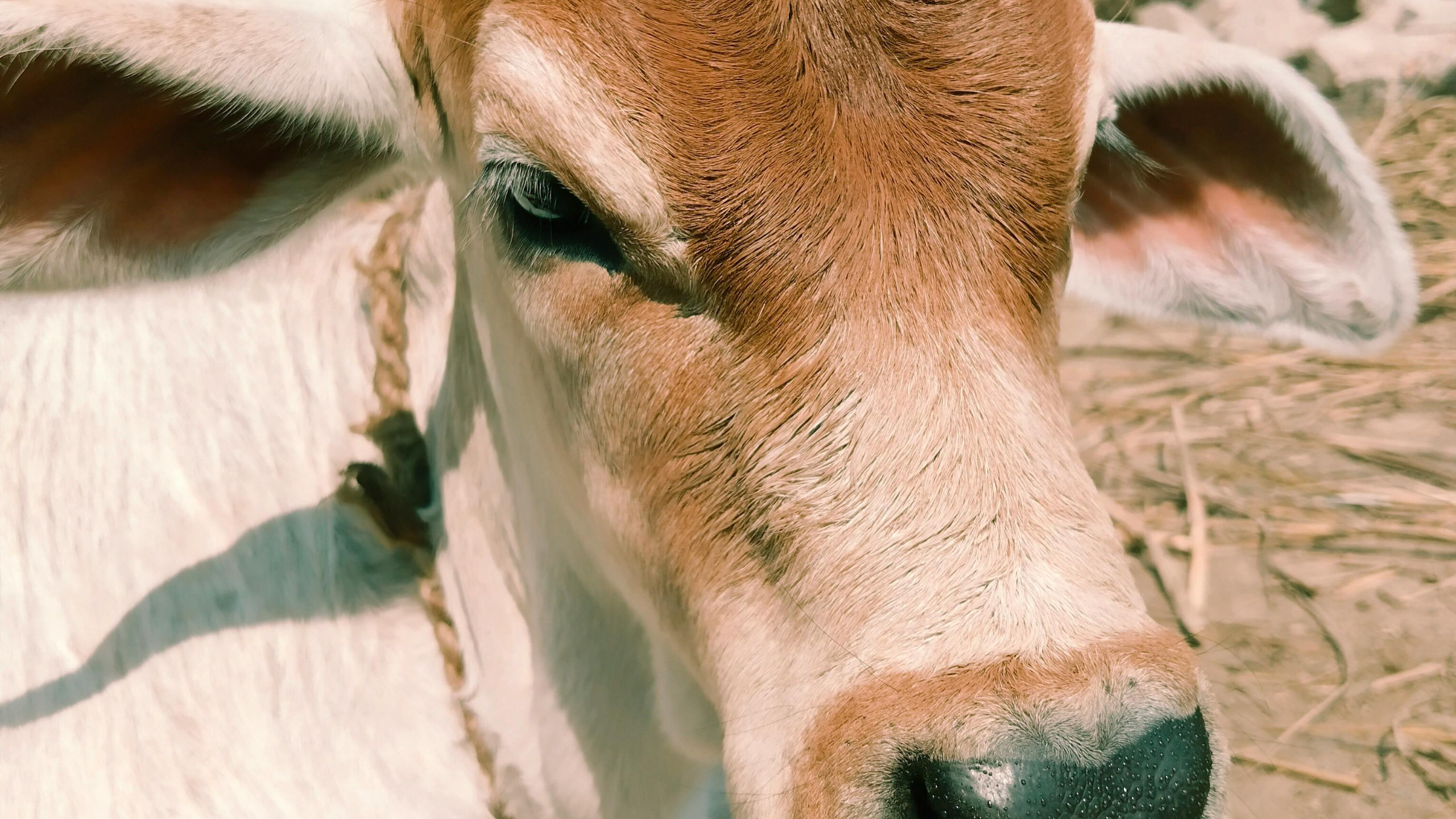
In recent years, ethical and small-scale livestock farming has become a point of interest for many urban buyers disillusioned with industrial cattle markets. The concerns are not unfounded. Overcrowded transport, poor feeding practices and the pressure to rapidly fatten animals before Eid have raised difficult questions about animal welfare. For many younger Muslims, particularly those already engaged with sustainability or mindful consumption, these realities feel increasingly incompatible with the spiritual essence of sacrifice.
The slow qurbani movement, while still niche, offers an alternative. Buyers are turning toward trusted local farms, naturally raised livestock and transparent sourcing practices. Some visit farms weeks in advance, asking how animals are fed, whether they are treated humanely and how they are transported. Others are choosing smaller animals over oversized, social media-ready purchases, resisting the pressure to equate religious devotion with scale.
What makes this movement notable is that it does not position ethics as separate from faith. Instead, it frames animal welfare as deeply embedded within it. Islamic teachings repeatedly emphasise mercy toward animals: feeding them properly, avoiding unnecessary suffering and ensuring humane slaughter. In this context, ethical qurbani becomes less about aesthetic lifestyle branding and more about aligning ritual practice with spiritual responsibility.
There is also something profoundly human about slowing the process down. In a culture increasingly dominated by instant delivery and convenience, conscious qurbani asks people to remain emotionally connected to what they consume. It reminds worshippers that sacrifice is not meant to be effortless or detached. The ritual carries weight precisely because it involves care, accountability and intention.
But the second half of the conversation, perhaps the more urgent one, begins after the sacrifice itself.
The three-part division of meat has long functioned as a framework for social equity, ensuring that Eid is experienced collectively rather than individually. Yet in many urban settings today, community structures have changed. Families live in apartments instead of multigenerational homes, neighbours often remain strangers and distribution can become reduced to a quick delivery list sent through messaging apps.
The deeper value of the three-part rule lies not only in charity, but in relational care. One portion sustains the household, grounding the ritual within gratitude and family gathering. Another portion extends outward toward friends, relatives and neighbours, reinforcing social bonds that modern life often weakens. The final portion directs attention toward those who may otherwise be excluded from the abundance of Eid altogether. Together, the division creates a circular model of nourishment where no one person remains at the centre.
For many conscious observers, this principle feels remarkably contemporary. At a time marked by rising food insecurity, inflation and widening class divides, qurbani redistribution carries renewed relevance. Community fridges, organised meat distribution drives and neighbourhood initiatives have become increasingly visible in cities during Eid season. Some families now coordinate with local charities before purchasing an animal, ensuring portions reach households most in need rather than remaining excessive leftovers in already well-stocked freezers.
There is also a growing awareness around dignity. Modern charitable practice increasingly emphasises thoughtful distribution over performative giving. Quietly delivering meat to families, organising equitable packaging and ensuring access beyond one’s immediate social circle are all part of this evolving ethic of care.
In many ways, the conscious qurbani movement reflects a broader generational shift. Younger Muslims are asking harder questions about how faith intersects with consumption, climate, labour and community. They are less interested in outward extravagance and more interested in coherence, in making sure the values preached in prayer align with the realities created through action.
The beauty of Eid-ul-Adha has never been in excess. It has always been in submission, generosity and shared humanity. The three portions of qurbani meat are not only practical; they strive for a more compassionate social order. One that nourishes the self without centring it entirely. One that honours animals not as commodities but as living beings entrusted to human care. One that understands sacrifice not as spectacle, but as responsibility.
Perhaps that is what the modern reader is searching for now: a slower, gentler understanding of devotion. One rooted not in display, but in mercy.